El Niño Safety Guide: How to Prepare for Extreme Weather, Health Risks, and Disruptions
Published: July 16, 2026 · 10 min read
TL;DR — Your El Niño Safety Checklist
El Niño doesn't cause a single type of disaster — it amplifies region-specific hazards. Your preparation should match where you live. If you're in California or Peru, prepare for flooding. If you're in Australia, Indonesia, or Central America, prepare for drought and heat. If you're in the US Southeast, prepare for winter storms and tornadoes. The common threads: have an emergency kit with 72 hours of supplies, monitor local forecasts, know your flood or fire risk zone, and prepare for higher food and energy costs. This guide covers the most serious health and safety risks from the 2026-27 very strong El Niño and what you can do about them.
Extreme Heat and Heatwaves
El Niño years are almost always hotter than normal globally. The extra heat stored in the tropical Pacific Ocean transfers to the atmosphere, raising average global temperatures. During strong events, this background warming combines with regional drought conditions to produce dangerous heatwaves.
Who is most at risk: Southeast Asia, India, Australia, the Amazon basin, Central America, the Horn of Africa, and the southern United States. Urban populations in cities without widespread air conditioning — Delhi, Bangkok, Jakarta, Manila, Lagos — face the highest heat-related mortality risk.
Health risks: Heat exhaustion and heatstroke, cardiovascular stress (especially in older adults and those with pre-existing conditions), dehydration, worsened respiratory conditions from heat-related air pollution (ground-level ozone). During the 2015-16 El Niño, the global average temperature exceeded 1°C above pre-industrial levels for the first time, and heat-related mortality spiked in India and Southeast Asia.
How to prepare:
- Identify cooling centers in your community before a heatwave hits.
- Check on elderly neighbors and those without air conditioning during heat warnings.
- Stay hydrated — don't wait until you're thirsty. During extreme heat events, drink water even if you don't feel hot.
- Know the symptoms of heat exhaustion (heavy sweating, weakness, cold/clammy skin, fast weak pulse) and heatstroke (hot red skin, high body temperature, rapid strong pulse, altered consciousness). Heatstroke is a medical emergency.
- Never leave children or pets in parked cars.
For more on El Niño and extreme temperatures, see El Niño and Heatwaves.
Flooding and Storm Safety
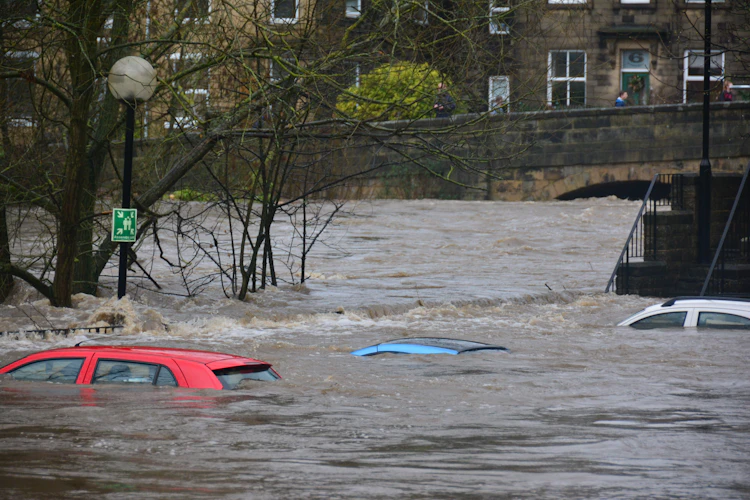
El Niño dramatically shifts rainfall patterns, creating flood risks in regions that don't normally flood and intensifying flood events where flooding is already common. The regions most at risk include the US West Coast during winter (atmospheric rivers), Peru and Ecuador (coastal flooding from warm water and enhanced rainfall), East Africa (the short rains season from October-December), and the US Southeast (winter storms and persistent rainfall).
Key safety rules for El Niño flooding:
- Know your flood zone. FEMA flood maps (US), local government floodplain maps, and regional hazard assessments tell you whether your home is at risk. If you're in a designated flood zone, flood insurance should be in place before the rainy season — most policies have a 30-day waiting period.
- Never drive through floodwater. Six inches of moving water can knock a person over; 12 inches can carry away a small car. Half of all flood-related deaths are vehicle-related.
- Have an evacuation route planned. Know the highest ground in your area and multiple ways to reach it. If you live in a flood-prone coastal area or near a river that has historically flooded during El Niño events, your evacuation plan should be practiced before the emergency.
- Prepare for mudslides and landslides in hilly terrain. If you live on or below a slope that has burned recently (wildfire scars are particularly vulnerable), or in areas with loose soils, monitor rainfall intensity. Prolonged heavy rain, not just the total amount, triggers landslides.
- Move valuable items and hazardous materials to upper floors if flooding is anticipated.
For detailed flood risk information, see El Niño Flooding: Which Regions Are Most at Risk.
Mosquito-Borne Disease Prevention
One of El Niño's most serious indirect health effects is the spread of mosquito-borne diseases. Changes in temperature and rainfall create conditions that expand mosquito habitat and accelerate disease transmission. The most significant diseases affected by El Niño are malaria, dengue fever, chikungunya, and Zika virus.
Which regions are most vulnerable: East Africa (highland malaria outbreaks during wet El Niño years), Southeast Asia (dengue spikes), South America (malaria in the Amazon basin during wet conditions), and new regions where warming temperatures allow mosquito species to expand their range.
During the 2015-16 El Niño: Tanzania, Kenya, and Ethiopia experienced major malaria outbreaks in highland areas that are normally too cool for sustained transmission. Dengue cases surged in Brazil, Thailand, and Vietnam. The WHO issued regional health advisories for all El Niño-sensitive disease zones.
How to protect yourself:
- Use EPA-approved insect repellent (DEET, picaridin, or oil of lemon eucalyptus) in affected regions.
- Sleep under insecticide-treated bed nets in malaria-endemic areas, especially during rainy seasons enhanced by El Niño.
- Eliminate standing water around homes — buckets, flower pots, old tires, and clogged gutters are breeding sites for Aedes mosquitoes that transmit dengue and chikungunya.
- Check travel health advisories from the WHO and CDC before traveling to El Niño-affected regions.
- Wear long sleeves and pants during dawn and dusk when many mosquito species are most active.
For a deeper look, see El Niño and Mosquito-Borne Diseases: Malaria, Dengue, and the Climate Connection.
Power Outages and Infrastructure Disruptions
Strong El Niño events place unusual stress on power grids and critical infrastructure. The risks vary by region: ice storms in Canada and the northern US can bring down power lines; heatwaves increase electricity demand for air conditioning, potentially triggering brownouts and blackouts; flooding damages substations and distribution infrastructure; and drought reduces hydroelectric generation capacity.
How to prepare for power outages:
- Build a 72-hour emergency kit: flashlights with extra batteries (not candles — fire risk), battery-powered or hand-crank radio, first aid kit, cash (ATMs don't work without power), portable phone chargers.
- Have a plan for medical needs — refrigerated medications, oxygen concentrators, CPAP machines. Know how long your medications can stay unrefrigerated.
- If you have a generator, never run it indoors or in a garage. Generator exhaust contains carbon monoxide — odorless, colorless, and lethal. Place it at least 20 feet from windows and doors.
- Keep your gas tank at least half full during severe weather seasons. Gas stations can't pump without electricity.
- Store at least 1 gallon of water per person per day for 3 days.
Food and Water Security
El Niño's agricultural effects — drought in some regions, flooding in others — drive up food prices globally and can create acute food shortages in vulnerable regions. During the 2015-16 El Niño, food price spikes affected millions of households worldwide.
What to expect during the 2026-27 El Niño: Higher prices for staple grains (rice, wheat, corn), vegetable oils, coffee, cocoa, and sugar. The regions most likely to face acute food shortages are the Dry Corridor of Central America, parts of the Horn of Africa, and communities dependent on rain-fed agriculture in Southeast Asia.
How to prepare:
- Stock non-perishable food supplies if you have storage space. Canned goods, dried grains, and legumes have long shelf lives.
- If you're a gardener, choose drought- or flood-resistant varieties depending on your region's El Niño tendency. See El Niño Gardening Guide.
- Monitor food price trends in your region. The FAO Food Price Index is a useful global tracker.
- For those in vulnerable regions, the WFP hunger map shows areas where food security is likely to deteriorate during El Niño.
For more on food price impacts, see When the Monsoon Fails: El Niño and Global Food Prices and El Niño's Impact on Global Agriculture.
Region-by-Region Safety Checklist for 2026-27
- California and US West Coast: Flood and mudslide preparedness. Clear drainage systems before winter. Have flood insurance in place. Prepare for atmospheric river events and road closures.
- US Southeast and Gulf Coast: Winter storm readiness. Ice and tornado risk in January-March 2027. Review tornado shelter plans. Prepare for prolonged power outages from winter storms.
- Peru, Ecuador, and coastal South America: Flood and landslide preparation. Identify evacuation routes. Expect coastal flooding and infrastructure damage.
- Australia and Indonesia: Bushfire and drought readiness. Review fire evacuation plans. Prepare for water restrictions and extreme heat events.
- East Africa: Flood preparedness for the October-December rainy season. Mosquito net distribution and malaria prevention. Food stockpiles for possible crop damage.
- Central America: Drought and food security monitoring. Water conservation measures. Heatwave preparedness in urban areas.
- Southern Africa: Drought preparation. Water storage and conservation. Livestock management adjustments.
- Canada (Ontario and Quebec): Ice storm preparedness. Emergency kit with 72+ hours of supplies. Generator safety review.
- Europe and UK: Winter storm readiness. Flood defense system checks. Prepare for transportation disruptions.
Explore more at the El Niño Guide — comprehensive climate science explained. For a broader look at El Niño's health effects, see El Niño and Human Health.