What Happens During a Super El Niño? The Global Cascade Effects
Published: July 25, 2026 · 8 min read
TL;DR
A Super El Niño reorganizes the planet's weather. The Pacific Ocean releases so much heat that the entire tropical circulation shifts. Fisheries collapse. Coral reefs bleach from Indonesia to the Caribbean. The Amazon burns. Peru floods. Australia dries out. Global economic losses reach tens of billions of dollars. And the effects cascade through food systems, insurance markets, and supply chains for years afterward.
The Physics: What Makes It Different
A regular El Niño warms the eastern Pacific by half a degree. A Super El Niño warms it by two degrees or more. That doesn't sound like much, but the tropical Pacific is a third of the planet's surface. Two degrees across a region that large represents an almost incomprehensible amount of energy — roughly the equivalent of millions of Hiroshima-sized bombs worth of extra heat stored in the upper ocean and gradually released to the atmosphere over the course of a year.
At the +2.0°C threshold, the Walker Circulation — the giant east-west atmospheric loop that normally drives the trade winds — effectively shuts down. The warm pool that normally sits over Indonesia migrates 8,000 kilometers east. The thermocline goes flat. The upwelling of cold, nutrient-rich water off Peru stops completely. Once these things happen, the entire global atmospheric circulation adjusts to a new configuration. That's when the cascade begins.
Ocean Impacts: Fisheries, Reefs, and Marine Heatwaves
The first and most direct casualty of a Super El Niño is the ocean itself.
Peruvian anchovy fishery: The world's largest single-species fishery — the source of roughly 10% of global fish catch by weight, mostly for fishmeal and fish oil — collapses. During the 1997-98 Super El Niño, the Peruvian anchovy catch dropped from 8 million tons to less than 1 million. During 2015-16, it fell about 70%. The fish don't die; they disperse into deeper, cooler water where the fishing fleet can't reach them. The economic impact ripples through the global animal feed industry — fishmeal prices spike, chicken and farmed salmon get more expensive, and the effects show up in supermarket prices months later.
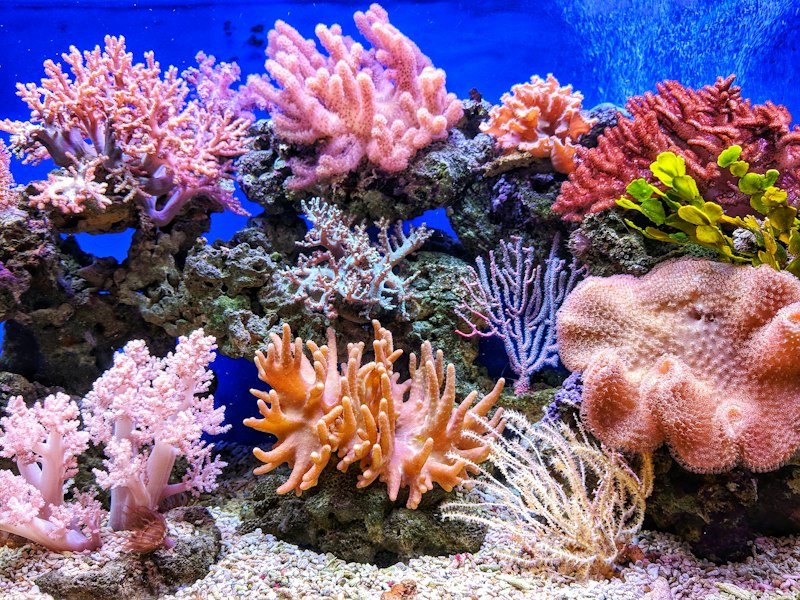
Coral bleaching: Super El Niños cause basin-wide coral bleaching. The 2015-16 event bleached 75% of the world's coral reefs. The Great Barrier Reef lost roughly 30% of its coral cover. Reefs in the Seychelles, Maldives, Kiribati, and the Caribbean all bleached simultaneously. Some recovered. Many didn't. The rate of recovery depends on local water quality and whether another bleaching event hits before the reef can bounce back — a problem that's getting harder as marine heatwaves become more frequent.
Marine food webs: The collapse of upwelling off South America starves the entire eastern Pacific food chain. Seabird die-offs are common — during 1997-98, an estimated 80% of adult Galápagos penguins died. Marine iguana populations crashed. Sea lion pups starved. These aren't just ecological tragedies; they're early warning signals for the economic impacts that follow.
Land Impacts: Floods, Droughts, and Fires
Flooding in Peru and Ecuador: The warm water off the coast supercharges evaporation, and the atmosphere responds with torrential rain. During the 1997-98 event, the Sechura Desert in northern Peru — one of the driest places on Earth — became a temporary lake covering 5,000 square kilometers. Roads, bridges, and thousands of homes were destroyed. The 2015-16 event caused an estimated $3 billion in damage in Peru alone.
California and the southern US: The jet stream shifts south, steering Pacific storms directly into California. The 1997-98 event brought 200% of normal rainfall to much of the state, triggering mudslides and flooding that caused over $500 million in damage. The 2015-16 event was less extreme for California but still brought above-normal precipitation to the southern tier. The impact isn't all negative — California reservoirs often fill during strong El Niño winters, providing water for subsequent dry years.
Drought in Australia and Indonesia: The flip side of the shifted convection: places that normally get rain go dry. During the 1982-83 Super El Niño, Australia experienced its worst drought of the 20th century. The 1997-98 event triggered massive forest fires in Indonesia that blanketed Southeast Asia in smoke for months. Australian wheat production can drop 30-50% during a strong El Niño year.
Amazon rainforest: The northern and eastern Amazon get significantly less rain during Super El Niño events. In 2015-16, the combination of drought and fire turned parts of the Amazon from a net carbon sink to a net carbon source — a feedback loop that amplifies the warming that caused the El Niño in the first place. The drought stress also makes the forest more vulnerable to fire in the following dry season, even after the El Niño has ended.
India and the monsoon: El Niño has a long historical correlation with weak Indian monsoons. Four of the last six major Indian drought years were El Niño years. For a country where roughly half the farmland is rain-fed, a weak monsoon means lower crop yields, higher food prices, and reduced rural income — effects that can shave a percentage point or more off India's GDP growth.
Atmosphere Impacts: Hurricanes, Monsoons, and Jet Streams
Atlantic hurricane suppression: This is one of the few broadly "positive" effects of a Super El Niño. Increased wind shear over the tropical Atlantic tears apart developing storms before they can organize. During the 2015 hurricane season, which coincided with the peak of a Super El Niño, the Atlantic saw 11 named storms vs. a historical average of 12, and only 4 hurricanes vs. an average of 6. But the suppression is statistical, not absolute — Hurricane Andrew (1992) was an El Niño year storm that caused $27 billion in damage.
Pacific typhoon intensification and track shift: While the Atlantic quiets down, the Pacific gets busier. Typhoons form further east and track further toward Japan, Korea, and sometimes Hawaii. The 2015 Pacific typhoon season was hyperactive — 27 named storms, including the strongest storm of the year (Hurricane Patricia, with 215 mph winds).
Global jet stream disruption: The shifted heat source in the tropical Pacific generates Rossby waves that propagate into the mid-latitudes, bending the jet stream. This is what drives the regional rainfall and temperature anomalies across North America, Europe, and Asia. The effects are probabilistic, not deterministic — a Super El Niño tilts the odds but doesn't guarantee specific outcomes in any given location.
The Economic Cascade
The economic damage from a Super El Niño doesn't come from one thing; it comes from everything happening at once. The 1997-98 event caused an estimated $35-45 billion in direct economic losses. The 2015-16 event: $25-35 billion. But those are direct, immediate costs. The cascading effects are harder to quantify:
- Food prices: Wheat, rice, maize, soybeans, palm oil, coffee, cocoa, sugar — all affected by El Niño-driven weather. The 2015-16 event contributed to a 10%+ spike in global food prices.
- Insurance: Reinsurance markets take a hit from simultaneous claims across multiple regions. After 1997-98, some reinsurers pulled back from certain markets entirely.
- Shipping and trade: The Panama Canal had to restrict ship transits during the 2015-16 event because Lake Gatun, which feeds the locks, was too low. Low river levels in the Amazon and elsewhere disrupt barge transport.
- Energy: Hydropower production drops in drought-hit regions. The 2015-16 event caused electricity rationing in several countries, including Venezuela, Zambia, and Ghana.
The Human Cost
The 1997-98 Super El Niño caused an estimated 23,000 deaths from storms, floods, and disease outbreaks. The 2015-16 event's death toll is harder to isolate from background trends, but southern Africa's drought alone put roughly 40 million people at risk of food shortage. Disease vectors shift during El Niño events — malaria and dengue outbreaks are correlated with the rainfall changes that El Niño produces. The 1997-98 event was linked to a major Rift Valley fever outbreak in East Africa and a cholera epidemic in Peru.
What Recovers and What Doesn't
Some systems bounce back within a year or two. Fish populations recover once upwelling resumes. Reservoir levels rebuild. Agricultural production returns to normal. But other impacts are longer-lasting or effectively permanent. Coral reefs that bleach and die take decades to recover, if they recover at all. Glaciers in the tropical Andes, which lose mass during El Niño-driven warm periods, are already retreating from background warming — a Super El Niño accelerates the loss. Some farmers who go bankrupt during an El Niño drought never return to farming.
The 2026 El Niño, whether it reaches Super status or not, will produce its own unique pattern of impacts. What's different this time: a warmer baseline, less recovery time since the last strong event, and — for the first time — real-time satellite and buoy data that gives us months of warning. We can see what's coming. Whether we use that lead time effectively is a different question.