El Niño and Home Insurance: What Every Homeowner Should Know in 2026
Published: June 25, 2026 · 7 min read
TL;DR
El Niño and home insurance — review flood coverage (most standard policies exclude it), check for hurricane deductibles in coastal states, and ensure your policy covers storm surge and mudslide damage.
Your Insurance Policy Has an El Niño Problem
Most homeowners don't think about El Niño until water is coming through the ceiling. By then, it's too late to fix the coverage gaps that turn a bad storm into a financial disaster. The insurance industry certainly thinks about El Niño — they've been quietly adjusting rates and pulling out of high-risk markets for years, using climate patterns as actuarial justification.
Here's the uncomfortable reality: a standard homeowners policy was not designed for the kind of weather that El Niño delivers. Flood damage? Not covered. Landslide triggered by heavy rain? Not covered. Sewer backup from overwhelmed municipal systems? Probably not covered. If you live in California, the Gulf Coast, the Southeast, or anywhere else where El Niño amplifies extreme precipitation, there's a decent chance you're walking around with insurance gaps you don't know about.

I've spent the last several weeks reading insurance industry reports, NOAA flood risk assessments, and reinsurance market analyses to understand where the real risks are. This is what homeowners actually need to check, not the generic "review your policy" advice that every insurance blog recycles.
Why El Niño Moves Insurance Markets
El Niño isn't just a weather pattern — it's a claims pattern. The 1997-98 event generated an estimated $35 billion in economic damages globally, a large chunk of which were insured losses from flooding, wind damage, and business interruption. The 2015-16 event drove $4 billion in insured losses in the US alone, mostly from winter storms and flooding in the South and California. The 2023-24 event contributed to a wave of homeowners insurance premium increases averaging 11.3% nationally in 2024, with California, Florida, and Louisiana seeing increases of 20-40%.
Reinsurers — the companies that insure insurance companies — have been raising rates on primary carriers in El Niño-exposed regions for years. Global reinsurance rates jumped 37% in 2023, with catastrophe-exposed regions seeing increases of 50% or more. That cost flows directly to your premium. When Swiss Re or Munich Re jacks up rates on State Farm and Allstate, your renewal notice gets more expensive six months later. The math is direct and brutal.
During El Niño years, the southern US gets hammered with heavy precipitation events. Atmospheric rivers slam into California. The Gulf Coast and Southeast see enhanced tornado activity. The Pacific Northwest avoids storms but gets wildfire risk from drought conditions. Each of these has its own insurance implications, and most of them fall into coverage gray zones that insurers exploit to deny claims.
The Flood Insurance Gap: Your Biggest Exposure
This is the one that ruins people financially, and it's the one most homeowners don't understand until it's too late.
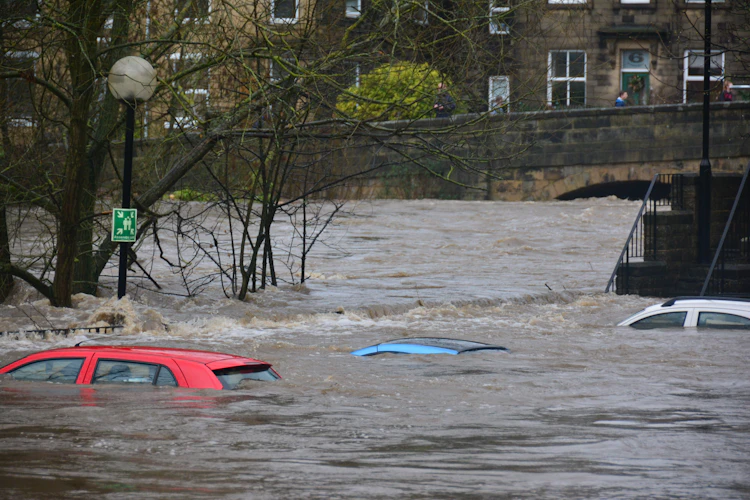
Standard homeowners insurance does not cover flood damage. Period. Not "limited coverage" — zero coverage. If a river overflows, a storm surge pushes inland, or heavy rain causes a creek to jump its banks and flood your basement, your homeowners policy pays nothing. You need a separate flood insurance policy, either through the National Flood Insurance Program (NFIP) or a private carrier.
During an El Niño winter, the flood risk in California and the southern states spikes dramatically. The 2023-24 El Niño triggered atmospheric river events in California that caused over $3 billion in flood damage, and a huge percentage of affected homeowners had no flood insurance because they weren't in a FEMA-designated Special Flood Hazard Area. They assumed "not in a flood zone = no flood risk," which is not how hydrology works during extreme precipitation events. FEMA flood maps are based on historical averages, not El Niño-amplified extremes. A 500-year flood plain becomes a 50-year flood plain during a strong El Niño, and nobody sends you a letter warning you about that.
NFIP coverage maxes out at $250,000 for the structure and $100,000 for contents. In California, where the median home price has crossed $800,000 in many markets, that leaves an enormous gap. Private flood insurance can cover the excess, but it's expensive (often $2,000-5,000 per year in high-risk zones) and getting harder to find as carriers pull back from catastrophe-exposed markets.
Wind, Landslides, and Sewer Backup: The Secondary Risks
Wind damage is generally covered by standard homeowners policies, but there's a catch. In hurricane-prone states (Florida, Texas, Louisiana, the Carolinas), wind deductibles are often separate from your general deductible and calculated as a percentage of your dwelling coverage — typically 2% to 5%. On a $400,000 home, a 5% wind deductible means you're paying the first $20,000 out of pocket before insurance kicks in. During El Niño years, when the Gulf and Southeast see enhanced severe weather, those deductibles get triggered more often than people expect.
Landslides and mudslides are generally excluded from homeowners policies, full stop. If heavy El Niño rain saturates a hillside and it slides into your house, you're not covered unless you have a separate Difference in Conditions (DIC) policy, which is expensive and hard to qualify for. After the 2023-24 California storms, the state saw over 700 reported landslide events, and the vast majority of affected homeowners had no coverage. The California FAIR Plan offers limited difference-in-conditions coverage as a supplement, but it caps at relatively low limits and has strict underwriting requirements.
Sewer and drain backup is typically excluded from standard policies but can be added as an endorsement for $50-150 per year. This is the cheapest and most overlooked protection you can add. When El Niño dumps heavy rain on a city, municipal stormwater systems get overwhelmed, and sewage backs up into basements through floor drains. The endorsement costs almost nothing compared to the $10,000-30,000 a basement remediation typically costs.
What to Do Now, Before the Next Storm
Check your flood zone — but don't trust it. Pull your FEMA flood map at msc.fema.gov, but understand that it's a baseline, not a prediction. If you're anywhere near a mapped flood zone during an El Niño year, you're at elevated risk even if your specific property is outside the shaded area. Consider a private flood insurance quote even if you're not required to carry it by your mortgage lender.
Add sewer backup coverage. This is the single highest-return insurance decision you can make in five minutes. Call your agent, ask for the water backup endorsement, and pay the $50-150. It covers what is statistically one of the most common El Niño-related claims.
Check your wind deductible. If you live in a coastal or hurricane-exposed state, look at your policy declarations page and find the wind/hail deductible. If it's a percentage rather than a fixed dollar amount, calculate what that percentage actually means in dollars. If the number makes you uncomfortable, shop around — some carriers offer buy-down options that reduce the percentage deductible in exchange for a higher premium.
Document everything now. Take photos of every room, every major appliance, your roof, your foundation, and your drainage systems. Store them in the cloud. When you file a claim after a storm, the insurance adjuster will ask for proof of pre-existing condition, and "I swear it wasn't like this before" doesn't count as documentation.
Understand your ALE coverage. Additional Living Expenses coverage pays for temporary housing if your home becomes uninhabitable. Standard policies typically cover 20% of your dwelling coverage limit, but during widespread disasters (like a major El Niño flood event), temporary housing becomes scarce and expensive. If you live in a high-risk area, consider increasing your ALE limit — the premium impact is minimal compared to the cost of six months in a hotel while your house gets rebuilt.